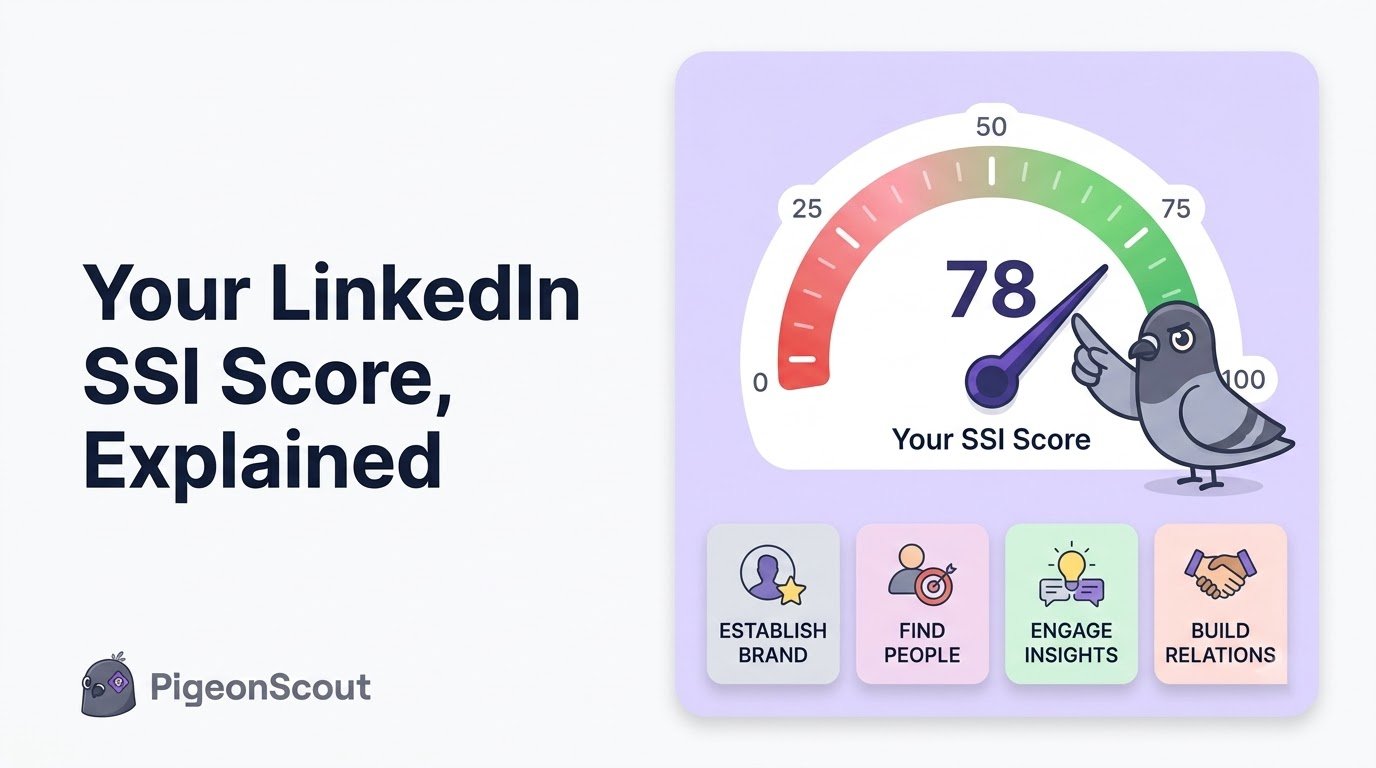
If you sell on LinkedIn, you’ve probably heard someone mention their “SSI score” like it’s a credit rating. The LinkedIn Social Selling Index is a number from 0 to 100 that LinkedIn assigns to your profile, meant to measure how effectively you use the platform to build relationships and sell.
Here’s what it actually measures, what counts as a good score, how to check yours in about ten seconds, how to improve it, and the honest truth about whether it matters as much as people claim.
What the SSI Is (and Isn’t)
Your SSI is LinkedIn’s own scorecard for “social selling,” the practice of using your network and content to find and build relationships with buyers instead of cold-calling strangers. LinkedIn updates it daily and breaks it into four equal parts worth 25 points each.
What it is not: a direct measure of revenue, or a number buyers ever see. It’s an internal-facing gauge of your activity and reach, not a guarantee of results. Keep that framing in mind before you start optimizing for the number itself.
How to Check Your LinkedIn SSI (Free)
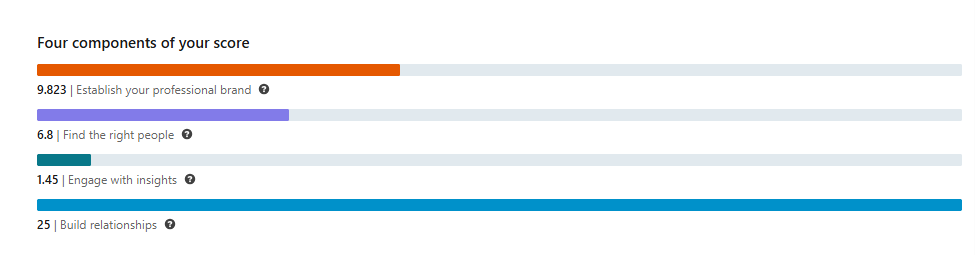
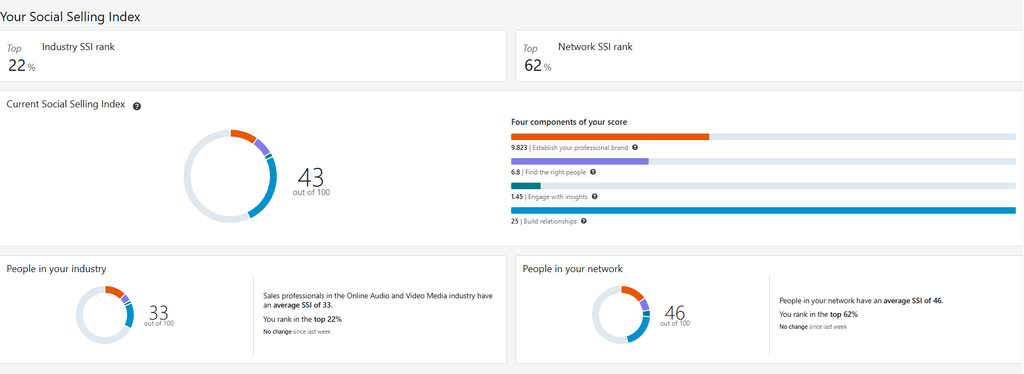
You don’t need Sales Navigator to see it. While logged in, go to linkedin.com/sales/ssi. Your score appears instantly, along with the four pillars, how you rank against your industry, and how you rank within your own network.
What Is a Good SSI Score?
You’ve got your number. So is it any good? Here’s roughly what each band tells you.
0 to 24: barely warmed up. Usually this means you’re not very active yet. The profile may be half-finished, you’re not connecting with enough of the right people, and there’s little happening around your account. The upside is obvious: from here, almost anything you do moves the needle.
25 to 49: finding your feet. You’ve got a presence, but it’s patchy. Maybe the profile looks sharp and you rarely post. Or you post plenty but connect with the wrong crowd. You’re on the radar, just not memorably yet.
50 to 74: real momentum. This is where it gets interesting. People in this range tend to post consistently, engage with the right people, and put genuine effort into relationships. Profile views climb, conversations start, and inbound interest begins to trickle in. For most sales pros, this is the band to aim for.
75 to 100: rare air. Not many people live up here, and it’s not an accident when they do. It usually reflects someone who has made LinkedIn a core part of how they work: thought leaders, seasoned sellers, execs, and people who publish and engage week in, week out.
The Four Pillars of Your SSI Score
Each pillar is worth 25 points. Here’s what drives each one, and how to lift it.
1. Establish your professional brand
This rewards a complete, credible profile and the content you publish. To raise it: finish every section, add media to your Featured area, and post useful content consistently. (See [How to Optimize Your LinkedIn Profile for Leads].)
2. Find the right people
This measures how efficiently you use LinkedIn’s search and tools to identify prospects. To raise it: use advanced search filters, view relevant profiles, and use tools like Sales Navigator’s lead lists if you have them.
3. Engage with insights
This tracks how you share and interact with content: posting, commenting, and joining conversations that add value. To raise it: comment thoughtfully every day, share content with your own take, and reply to comments on your posts.
4. Build relationships
This reflects the strength and growth of your network, especially connections with senior people. To raise it: send personalized connection requests, nurture existing relationships, and grow your network deliberately rather than randomly.
🕊️ PigeonScout tip
Notice that three of the four pillars are really about doing the right activities consistently: engaging, finding the right people, and building relationships. That is exactly what good outreach automates in a human way. The trap is chasing the score by spraying connection requests and generic comments, which can actually hurt your account. PigeonScout is built to raise the substance behind those pillars, real conversations at a safe, human pace, rather than gaming a number. Improve the behavior and the score follows.
Does the SSI Actually Matter?
Time for the honest part most guides skip.
LinkedIn has published data suggesting that people with higher SSI scores create more opportunities and hit quota more often. There’s a real correlation. But correlation is the key word: a high SSI is a symptom of good LinkedIn habits, not the cause of sales.
Picture two sellers. One sits in the 80s but sends the same generic pitch to everyone, and their pipeline stays empty. The other sits in the 50s but pairs steady activity with relevant, personalized outreach, and they book meeting after meeting. The score didn’t decide that. The quality of their conversations did.
So treat SSI as a useful dashboard light, not a target. If it’s low, it’s a helpful nudge that you’re neglecting one of the four behaviors. If it’s high, great, but don’t confuse visibility with results. The score that pays your bills is booked meetings, not a number on an internal LinkedIn page. Think of SSI as a visibility indicator. What you do with that visibility is what actually matters.
How to Raise Your SSI (Without Gaming It)
Improving your SSI isn’t about tricking the score. It’s about genuinely becoming more active, relevant, and useful to the people you want to reach. Three habit areas do most of the work.
Sharpen your profile
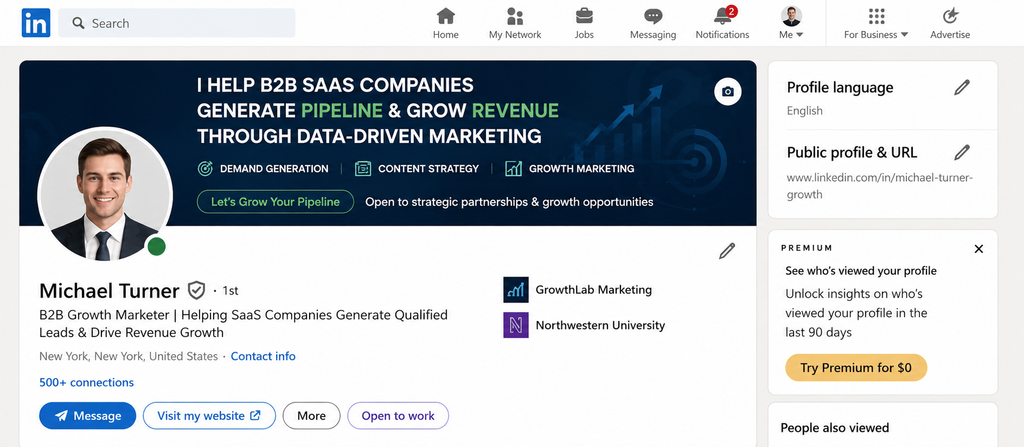
Think of your profile as your professional storefront. If it looks generic or half-built, people leave before they even get to your message. A few quick wins: a banner that says what you do and who you help instead of a stock photo, a headline that goes beyond your job title (“Helping B2B SaaS teams build pipeline through personalized outreach” beats “Account Executive”), a Featured section showing your strongest work, and every remaining section actually filled in. (See [How to Optimize Your LinkedIn Profile for Leads].)
Post consistently, and usefully
You don’t need to become a full-time creator to benefit here. Two or three useful posts a week is a solid start. What matters is consistency and relevance, not posting for the sake of activity. Formats that tend to land: industry myths and honest contrarian takes, behind-the-scenes lessons from your actual work, customer stories with real numbers, and practical tips people can apply the same day. Stuck for ideas? An AI assistant can help you brainstorm angles and outlines, and our [What to Post on LinkedIn] guide gives you a content system that keeps you from ever running dry.
Engage with the right people, not everyone
This is where most LinkedIn users leave opportunities on the table. It isn’t only how much you interact, it’s who you interact with. Comment with a real perspective on your ideal customers’ posts, and skip the “Great post!” filler. Personalize every connection request with a genuine reason to accept. Use Sales Navigator to track your ideal customer profile and warm people up before you reach out, so your eventual message feels natural. And follow the conversations your buyers actually care about rather than engaging at random. (More in [How to Network on LinkedIn].)
The weekly habit, in short
- Finish any unfinished profile sections
- Comment meaningfully on a handful of ideal-customer posts each day
- Send ten personalized connection requests, not generic ones
- Publish two useful posts
- Reply to every comment you receive
Do these because they build real relationships. The higher score is just the scoreboard catching up.
Frequently Asked Questions
What is a good LinkedIn SSI score? Generally, 50 to 74 signals strong, consistent activity, and 75 or above is exceptional and fairly rare. Below 50 means there’s real room to grow. Judge it against your industry benchmark and your own trend rather than chasing a fixed number, since “good” varies by field.
How do I check my LinkedIn SSI for free? Log in and visit linkedin.com/sales/ssi. Your score, the four pillars, and your industry and network rankings appear instantly. You do not need a Sales Navigator subscription.
Does SSI affect my reach or ranking on LinkedIn? No. SSI measures your social-selling activity, not the lever the feed algorithm uses to rank your posts. Improving it is worthwhile because the underlying behaviors help you, not because the number itself boosts you.
How do I improve my LinkedIn SSI score? Focus on three habits: sharpen your profile, post useful content two or three times a week, and engage intentionally with your ideal customers. These lift the behaviors behind all four pillars, and the score follows.
Is a high SSI worth chasing? Chase the habits, not the score. A high SSI reflects good LinkedIn behavior, but it doesn’t guarantee sales. A seller in the 50s with sharp, personalized outreach will out-earn one in the 80s who blasts generic messages. Focus on real conversations and let the number follow.
The Bottom Line
Your LinkedIn Social Selling Index is a handy snapshot of four healthy habits: a strong profile, smart prospecting, genuine engagement, and real relationship-building. Check it now and then, note which pillar is weakest, fix the habit behind it, and then get back to the work that actually books meetings.
👉 Read next: [How to Use LinkedIn Sales Navigator] and [How to Optimize Your LinkedIn Profile for Leads].
🕊️ Turn healthy habits into booked meetings
A high SSI means you’re doing the right things. PigeonScout scales those things safely: human-paced LinkedIn and email outreach with AI replies that sound like you, so the relationships you build actually turn into pipeline. [See how it works →]